
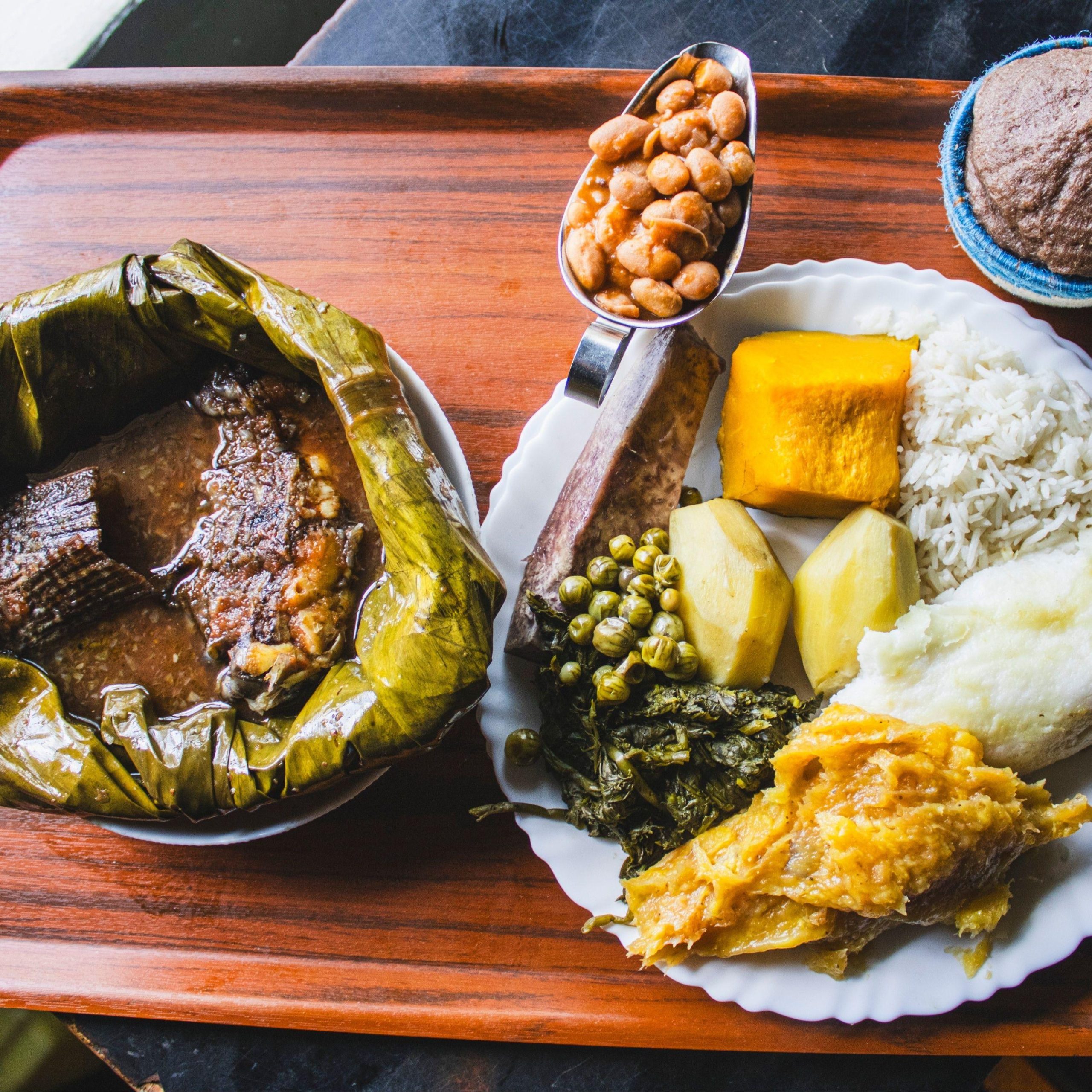
Luwombo in Uganda: History, Ingredients, Preparation and How to Enjoy This Traditional Dish
Luwombo in Uganda: History, Ingredients, Preparation and How to Enjoy This Traditional Dish
If there is one traditional Ugandan dish that beautifully brings together food, culture and cooking heritage, it is Luwombo.
Known for its rich aroma, tender ingredients and distinctive banana-leaf preparation, Luwombo is one of Uganda’s most celebrated traditional meals. It is particularly associated with the Buganda region, where it has an important place in culinary and cultural heritage.
Unlike dishes prepared by simply boiling, frying or roasting ingredients in an open pot, Luwombo is traditionally cooked inside a carefully folded banana-leaf parcel. The ingredients are enclosed and steamed slowly, allowing their flavours to combine.
The result is a delicious meal that can include chicken, beef, goat meat, groundnut sauce, mushrooms or other ingredients, depending on the recipe and household tradition.
For travelers visiting Uganda, tasting Luwombo is more than trying another local dish. It is an opportunity to experience a part of the country’s food heritage.
This guide explores what Luwombo is, where it comes from, how it is prepared, the different varieties, what it tastes like and where visitors may experience it.
What Is Luwombo?
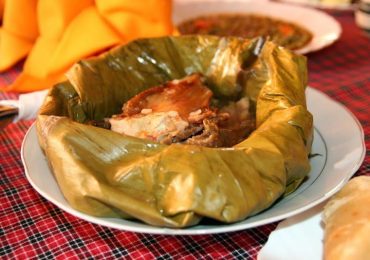
Luwombo is a traditional Ugandan dish prepared by cooking ingredients inside banana leaves.
The ingredients are placed inside a prepared banana-leaf parcel, which is folded and secured before being cooked slowly through steaming.
Depending on the recipe, the parcel may contain:
- Chicken
- Beef
- Goat meat
- Groundnut sauce
- Mushrooms
- Fish
- Vegetables
- Onions
- Tomatoes
- Local herbs and seasonings
The ingredients vary according to regional preferences, family recipes and the type of Luwombo being prepared.
One of the most distinctive features of the dish is the cooking method. Instead of exposing the ingredients directly to a cooking pot, the banana leaves form a natural enclosure that helps retain moisture and flavour.
Luwombo is often served with traditional Ugandan staples such as matoke, cassava, sweet potatoes, rice or other accompaniments.
The Cultural History of Luwombo
Luwombo is strongly associated with Buganda, one of Uganda’s traditional kingdoms.
It is widely regarded as an important part of Buganda’s culinary heritage and is often connected with traditional royal and ceremonial dining.
Stories about its historical development are passed down through families and communities. Some accounts associate the dish with the royal court, although details of its origins and the individuals involved vary between oral histories.
What is clear is that Luwombo has developed into a much-loved dish enjoyed beyond the royal and ceremonial settings with which it is historically associated.
Today, it can be prepared in homes, restaurants and during special gatherings.
Its importance is not only in the ingredients but also in the preparation. The careful handling of banana leaves, arrangement of food and slow cooking reflect a style of traditional food preparation that has been maintained across generations.
Why Is Luwombo Important in Ugandan Culture?
Food often communicates more than flavour.
In Uganda, traditional dishes can express hospitality, family identity, regional heritage and respect for guests.
Luwombo is particularly valued because its preparation takes time and attention.
In some households, it is prepared for:
- Family gatherings
- Special visitors
- Celebrations
- Traditional functions
- Important meals
- Festive occasions
It is also enjoyed as an everyday or restaurant meal, depending on the household and setting.
For many people, the dish brings memories of family cooking and shared meals.
Its banana-leaf presentation also gives it a distinctive appearance that makes serving Luwombo an experience in itself.
What Makes Luwombo Different From Other Ugandan Dishes?
Uganda has a wide variety of traditional foods, including matoke, posho, groundnut sauce, roasted meats, beans and cassava.
Luwombo stands out because of its cooking technique.
| Feature | Luwombo | Many Other Traditional Dishes |
|---|---|---|
| Main cooking method | Enclosed steaming | Boiling, frying, roasting or open-pot cooking |
| Cooking container | Banana-leaf parcel | Saucepan, pot, grill or pan |
| Flavour | Moist, aromatic and well combined | Depends on the dish |
| Preparation | Requires careful wrapping and slow cooking | Varies |
| Presentation | Often served from or alongside the leaf parcel | Usually plated or served from a pot |
The banana-leaf parcel is the defining feature.
It helps hold the ingredients together while they cook and contributes to the characteristic aroma.
Main Types of Luwombo in Uganda
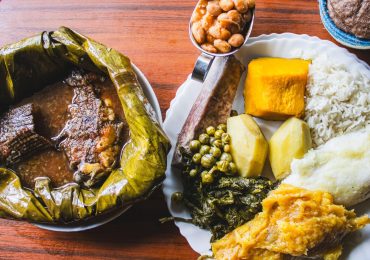
Luwombo is not limited to one recipe.
Different households and cooks prepare it using different ingredients. The following are among the varieties travelers may encounter.
1. Chicken Luwombo
Chicken Luwombo is one of the best-known versions.
Pieces of chicken are seasoned and placed inside banana leaves, sometimes with onions, tomatoes, groundnut sauce or other ingredients.
The parcel is then folded and steamed until the chicken is tender.
The result is a moist dish with a rich aroma and a flavour that develops during the slow cooking process.
Chicken Luwombo is a good introduction for visitors who want to experience the dish for the first time.
2. Beef Luwombo
Beef Luwombo is prepared using pieces of beef enclosed in banana leaves.
Depending on the recipe, the meat may be combined with tomatoes, onions, groundnut sauce or other seasonings.
Because beef can take time to become tender, slow cooking is particularly important.
A well-prepared beef Luwombo should be moist and tender rather than dry.
3. Goat Meat Luwombo
Goat meat is another ingredient used in some Luwombo recipes.
Its flavour is distinctive and can work well with traditional seasonings and sauces.
As with beef, the cooking time needs to be sufficient to soften the meat.
4. Groundnut Luwombo
Groundnuts are an important ingredient in many Ugandan meals.
Groundnut Luwombo may feature a rich groundnut sauce prepared with other ingredients and cooked inside the banana-leaf parcel.
The sauce gives the dish a creamy texture and a nutty flavour.
This version can be particularly appealing to travelers who enjoy rich, savoury sauces.
5. Mushroom Luwombo
Mushroom Luwombo offers an alternative to meat-based preparations.
Mushrooms can be combined with onions, tomatoes, groundnut sauce and other ingredients before being wrapped and steamed.
It can be a suitable option for some vegetarian travelers, although they should always confirm that the preparation contains no meat, fish or meat stock.
6. Fish Luwombo
Some cooks prepare Luwombo using fish.
The fish is placed inside banana leaves with suitable seasonings and other ingredients, then steamed.
The cooking time and ingredients depend on the type of fish and the particular recipe.
Travelers should ask about the fish used and whether it contains bones.
What Ingredients Are Used to Make Luwombo?
There is no single universal ingredient list because recipes differ.
However, a traditional preparation may use the following.
| Ingredient | Purpose |
|---|---|
| Banana leaves | Enclose the food during cooking |
| Chicken, beef, goat or fish | Main protein in meat or fish versions |
| Groundnuts | Create a rich sauce in some recipes |
| Onions | Add flavour |
| Tomatoes | Contribute moisture and acidity |
| Salt | Seasoning |
| Garlic | Optional flavouring |
| Ginger | Optional flavouring |
| Local herbs and spices | Add aroma and character |
| Mushrooms or vegetables | Used in selected variations |
Some cooks prefer simple seasoning that allows the main ingredient to stand out. Others use richer sauces and additional ingredients.
The choice often reflects family preference and the style of Luwombo being prepared.
Why Are Banana Leaves Used?
Banana leaves are central to the traditional preparation of Luwombo.
They are flexible when properly prepared and can be folded around food to create a parcel.
During cooking, they help:
- Hold the ingredients together
- Retain moisture
- Reduce direct exposure to the cooking vessel
- Allow the food to steam
- Contribute a characteristic aroma
The leaves also make the dish visually distinctive.
They are not simply decorative wrapping. They are part of the cooking method.
How Are Banana Leaves Prepared for Luwombo?
Preparing the leaves correctly is important.
Fresh banana leaves can tear if folded without preparation.
A traditional cook may gently heat or soften the leaves so they become more flexible.
The process generally involves:
- Selecting suitable banana leaves.
- Cleaning them appropriately.
- Removing or trimming unsuitable sections.
- Gently softening the leaves with heat.
- Allowing them to cool enough to handle.
- Preparing the pieces needed for wrapping.
The exact technique varies between cooks.
The aim is to make the leaves flexible enough to hold the ingredients without tearing.
How Is Luwombo Traditionally Cooked?
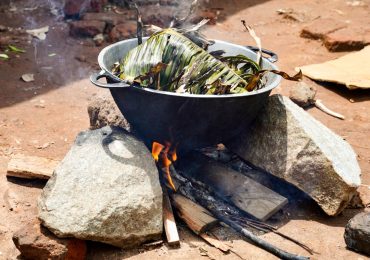
The cooking process is one of the most interesting aspects of the dish.
Although individual recipes differ, the general method follows a few stages.
Step 1: Prepare the Ingredients
The main ingredient is cleaned and prepared.
Meat is cut into suitable pieces, while vegetables, onions, tomatoes and other additions are prepared separately.
If groundnut sauce is being used, it is prepared according to the recipe.
Step 2: Prepare the Banana Leaves
The leaves are cleaned and softened so that they can be folded without breaking.
Step 3: Arrange the Ingredients
The prepared ingredients are placed inside the banana leaves.
Depending on the recipe, the cook may arrange the main ingredient together with sauce, vegetables and seasoning.
Step 4: Fold the Parcel
The banana leaves are folded carefully around the food.
The parcel must be secure enough to prevent the contents from escaping during cooking.
Step 5: Place the Parcels in a Cooking Vessel
The wrapped food is arranged in a suitable cooking vessel.
Additional banana leaves may be used to line or cover the cooking space.
Step 6: Steam Slowly
The parcels are cooked slowly using steam.
The cooking time depends on the ingredients, parcel size, heat and recipe.
Meat-based versions generally require sufficient time for the meat to become tender.
Step 7: Check and Serve
Once properly cooked, the parcel is carefully opened or served for presentation.
The result is a moist and aromatic dish ready to be enjoyed with traditional accompaniments.
What Does Luwombo Taste Like?
Luwombo has a distinctive flavour that is difficult to compare directly with ordinary fried or boiled dishes.
Its taste depends on the ingredients, but several characteristics are common.
Moisture
Because the food is enclosed during cooking, it can retain much of its natural moisture.
Richness
Groundnut-based versions can have a creamy, nutty character.
Aroma
The combination of ingredients and banana-leaf cooking creates a recognisable aroma.
Tenderness
Slow cooking can make meat tender and allow the flavours to develop.
Balanced seasoning
The taste can range from relatively simple and savoury to rich and strongly flavoured.
For visitors, the best way to understand Luwombo is to taste it rather than relying only on a description.
What Is Luwombo Served With?
Luwombo is usually enjoyed with a staple food that complements its sauce and flavour.
Common accompaniments include:
Matoke
Matoke, made from cooking bananas, is one of the most familiar accompaniments.
Its soft texture works well with the sauce from Luwombo.
Cassava
Cassava can be boiled or prepared in other traditional ways.
It provides a filling accompaniment.
Sweet Potatoes
Sweet potatoes add a naturally sweet flavour that contrasts with savoury sauces.
Rice
Rice is a familiar option for visitors and works particularly well with saucy preparations.
Posho
Posho, made from maize flour, is another common Ugandan staple that can be served with sauces and meat dishes.
Yams and Other Local Staples
Depending on the household or restaurant, other local foods may accompany Luwombo.
Is Luwombo Spicy?
Not necessarily.
Luwombo is not defined by a particular level of chilli heat.
Some versions are mild, while others may include chilli or stronger seasonings.
If you prefer mild food, ask the cook or server before ordering.
You can also explain if you would like chilli served separately.
Is Luwombo Healthy?
Luwombo can be part of a balanced meal, but its nutritional content depends on the ingredients and portion size.
For example:
- Chicken provides protein.
- Beef and goat meat provide protein and minerals.
- Groundnuts provide fats, protein and energy.
- Mushrooms contribute fibre and other nutrients.
- Vegetables contribute vitamins and fibre.
- Matoke, cassava and rice provide carbohydrates.
Groundnut sauces can be energy-dense, and meat-based versions vary in fat content.
People with food allergies or specific dietary needs should ask about the ingredients before eating.
Can Vegetarians Eat Luwombo?
Yes, some Luwombo recipes can be prepared without meat or fish.
Mushroom and vegetable versions may be suitable for vegetarians.
However, travelers should not assume that a dish is vegetarian simply because the main visible ingredient is vegetables.
Ask whether the cook has used:
- Meat stock
- Fish
- Dried fish
- Meat fat
- Animal-based seasoning
For vegan travelers, also ask whether any animal-derived ingredients have been added.
If you have a serious allergy or strict dietary requirement, communicate it clearly before the meal is prepared.
Is Luwombo the Same as Food Cooked in Banana Leaves Elsewhere in East Africa?
Not exactly.
Cooking food in leaves is found in different parts of Africa and beyond.
However, Luwombo has its own identity within Ugandan culinary heritage, particularly its association with Buganda and its traditional preparation.
The ingredients, wrapping technique, serving customs and cultural significance can differ from other banana-leaf cooking traditions.
It is therefore better to appreciate Luwombo as a distinct Ugandan dish rather than treating all leaf-wrapped foods as the same.
When Do Ugandans Eat Luwombo?
Luwombo can be enjoyed at different times and in different settings.
It may be prepared for:
- Family meals
- Weekend lunches
- Special visitors
- Celebrations
- Traditional gatherings
- Restaurant dining
- Festive occasions
In some households, it is associated with more special meals because preparation can require time and attention.
However, it is not restricted to ceremonies or formal occasions.
Where Can Travelers Eat Luwombo in Uganda?
Travelers may find Luwombo in restaurants serving traditional Ugandan cuisine, some hotels, cultural dining experiences and private homes where hosts prepare local dishes.
Availability varies by location and establishment.
Kampala
Kampala is a practical place to look for traditional Ugandan food.
Restaurants serving local cuisine may offer Luwombo alongside dishes such as matoke, groundnut sauce, beans and other regional meals.
Ask whether it is available on the day you visit, as some preparations take time.
Entebbe
Travelers staying in Entebbe can ask their hotel or local guide about restaurants offering traditional Ugandan meals.
Some establishments may be able to arrange Luwombo with advance notice.
Other Parts of Uganda
Traditional dishes and cooking methods vary across the country.
Travelers visiting other regions can ask local hosts and guides about similar traditional meals and regional food experiences.
Luwombo is particularly associated with Buganda, but its popularity extends beyond the central region.
Can You Learn to Prepare Luwombo During a Uganda Cultural Tour?
A food-focused cultural experience can be an excellent way to understand Luwombo.
Depending on the host and arrangements, visitors may have an opportunity to:
- Learn about banana-leaf preparation
- Identify traditional ingredients
- Observe food preparation
- Understand how the parcels are folded
- Learn about local cooking methods
- Share a meal with local hosts
A hands-on cooking experience should always be arranged with the host’s agreement.
Not every household or community offers cooking demonstrations, so travelers should not assume that a private family meal automatically includes a cooking lesson.
How to Enjoy Luwombo as a First-Time Visitor
If you have never tried Luwombo, a few simple suggestions can make the experience more enjoyable.
Ask Which Version Is Available
Chicken, beef, goat, fish and vegetarian versions can taste quite different.
Ask about the ingredients before ordering.
Try It With Matoke
Matoke is a natural accompaniment and gives you a good introduction to a traditional Ugandan meal.
Taste the Sauce
If the dish includes groundnut sauce, try a little with the main ingredient and staple food.
Ask About the Preparation
The banana-leaf cooking method is one of the most interesting parts of Luwombo.
A restaurant server or local guide may be able to explain how the particular version was prepared.
Take Your Time
Luwombo is best enjoyed as part of a relaxed meal rather than something to eat in a hurry.
Luwombo and Ugandan Food Tourism
Food is an important part of travel.
Visitors often remember not only the wildlife and landscapes they experience but also the meals they share along the way.
Luwombo can be part of a wider Ugandan food journey that includes:
- Matoke
- Groundnut sauce
- Rolex
- Cassava
- Posho
- Traditional beans
- Roasted plantain
- Local fruits
- Regional dishes
A food-focused experience can also introduce travelers to local markets, ingredients and cooking traditions.
For safari visitors, this provides a different way to understand Uganda beyond its national parks.
How to Combine Luwombo With a Uganda Safari
You do not need to organize a separate food holiday to experience Ugandan cuisine.
A Luwombo meal can fit naturally into a broader safari itinerary.
Kampala Cultural Experience
Begin your journey with a traditional Ugandan meal in Kampala.
You can combine this with a market visit, heritage experience or city tour.
Jinja and the Nile
Travelers visiting Jinja can explore local food experiences alongside the town’s cultural and river activities.
Western Uganda Safari
A journey through western Uganda can introduce you to different regional foods, local markets and community experiences.
Gorilla Trekking
Travelers visiting Bwindi or Mgahinga can ask their lodge or safari operator about traditional meals available in the area.
The exact dishes offered depend on the accommodation and local arrangements.
Luwombo vs Other Traditional Ugandan Foods
Uganda’s cuisine includes many dishes with different ingredients and preparation methods.
| Dish | Main Characteristics |
|---|---|
| Luwombo | Ingredients enclosed in banana leaves and steamed |
| Matoke | Cooking bananas prepared as a staple |
| Groundnut sauce | Rich sauce made from groundnuts |
| Rolex | Chapati rolled around an egg-and-vegetable filling |
| Posho | Firm maize-flour staple |
| Luwombo with mushrooms | A meat-free variation when prepared without animal ingredients |
| Eshabwe | Traditional Ankole-style ghee-based sauce |
Each dish offers a different perspective on Ugandan food culture.
Luwombo is especially distinctive because of its enclosed banana-leaf cooking method.
Frequently Asked Questions About Luwombo in Uganda
What is Luwombo in Uganda?
Luwombo is a traditional Ugandan dish in which ingredients such as chicken, beef, goat meat, fish, mushrooms or groundnut sauce are wrapped in banana leaves and slowly steamed.
Where does Luwombo originate?
Luwombo is strongly associated with Buganda and is an important part of Buganda’s culinary heritage. Historical accounts of its origins vary.
What is the main ingredient in Luwombo?
There is no single main ingredient. Popular versions use chicken, beef, goat meat, fish, mushrooms or groundnut-based preparations.
Why is Luwombo cooked in banana leaves?
Banana leaves create a parcel that holds the ingredients together, retains moisture and helps produce the dish’s distinctive aroma.
Is Luwombo steamed or boiled?
It is traditionally cooked by steaming the wrapped ingredients slowly in a cooking vessel.
Is chicken Luwombo popular?
Yes. Chicken is one of the familiar ingredients used in Luwombo preparations.
Is Luwombo spicy?
Not necessarily. Its flavour depends on the recipe and seasonings. Some versions are mild, while others may include chilli.
What do you eat with Luwombo?
Common accompaniments include matoke, cassava, sweet potatoes, rice and posho.
Is Luwombo a royal dish?
Luwombo is closely associated with Buganda’s culinary heritage and is often linked with royal dining traditions. Today, it is also enjoyed in ordinary households and restaurants.
Can vegetarians eat Luwombo?
Some versions use mushrooms or vegetables. Vegetarians should confirm that no meat, fish or animal stock has been added.
Can vegans eat Luwombo?
A vegan version may be possible, but visitors should confirm that the preparation contains no animal-derived ingredients.
Can I find Luwombo in Kampala?
Yes, travelers may find it at restaurants serving traditional Ugandan cuisine. Availability varies, so ask in advance.
Is Luwombo difficult to prepare?
It requires care, particularly when preparing and folding the banana leaves. The slow cooking process also takes time.
Can I learn to cook Luwombo in Uganda?
Some cultural or cooking experiences may offer demonstrations or hands-on preparation. Arrange this with the host in advance.
Is Luwombo eaten only in Buganda?
It is particularly associated with Buganda, but the dish is enjoyed more widely in Uganda.
Final Thoughts: Why You Should Try Luwombo in Uganda
Luwombo is more than a traditional meal. It represents a distinctive part of Uganda’s food heritage.
Its banana-leaf cooking method, rich ingredients and association with Buganda make it one of the country’s most interesting dishes.
Whether you choose chicken, beef, goat meat, fish, groundnut sauce or a vegetarian version, the experience offers an opportunity to appreciate the care involved in traditional Ugandan cooking.
For visitors, trying Luwombo is a wonderful way to connect with local food culture.
And if you have the opportunity to watch it being prepared, take it. Understanding how the banana leaves are softened, filled, folded and steamed makes the meal even more memorable.
When you visit Uganda, make room for Luwombo. It is one of the traditional dishes worth experiencing.
Experience Ugandan Food and Culture With Ikumi Gorilla Vacations
At Ikumi Gorilla Vacations, we believe that discovering Uganda should go beyond wildlife viewing.
Your journey can also include traditional food, local markets, cultural experiences and opportunities to learn about everyday life.
Depending on your itinerary and local arrangements, we can help you explore Ugandan cuisine and discover dishes such as Luwombo alongside your safari.
Contact Ikumi Gorilla Vacations with your travel dates, number of travelers, preferred accommodation and interests. We can help you plan a Uganda journey that combines wildlife, landscapes, food and culture.