
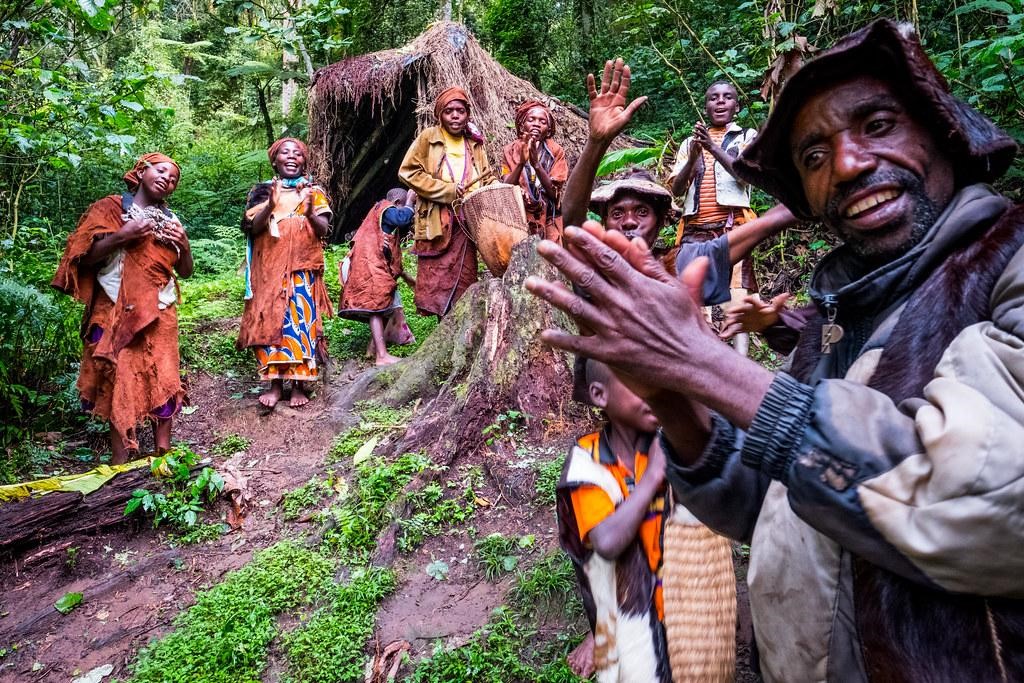
Batwa people of Bwindi: History, Culture, Traditions and Way of Life
History of the Batwa People of Bwindi
The Batwa people, often referred to as the Twa, are among the oldest known inhabitants of the forests of the Great Lakes region of Central Africa. For generations, Batwa communities lived in and around the forests of present-day southwestern Uganda, including the forests that are now part of Bwindi Impenetrable National Park.
Life in the Forest
Traditionally, the Batwa lived as forest-dependent hunter-gatherers. The forest provided much of what they needed for survival, including wild plants, fruits, honey, medicinal herbs and game. They also developed extensive knowledge of the forest, its wildlife and its medicinal plants.
The forest was more than a source of food—it was central to Batwa culture, spirituality and identity. Their traditions, stories and beliefs were closely connected to the natural environment.
Their Relationship with the Forest
The Batwa historically shared the forest environment with the mountain gorillas and other wildlife. Their traditional way of life was generally based on using forest resources rather than establishing large permanent agricultural settlements.
This makes the Batwa an important part of the cultural history surrounding Bwindi today.Creation of Bwindi Impenetrable National Park
A major turning point came in the 1990s. Bwindi was first designated a forest reserve and later became Bwindi Impenetrable National Park in 1991, primarily to protect its exceptional biodiversity and endangered mountain gorillas.
However, the creation of the protected area also meant that Batwa people were removed or restricted from their traditional forest homeland and could no longer practice many aspects of their traditional forest-based lifestyle.
Life After Eviction
After losing access to the forest, many Batwa communities faced serious challenges, including limited access to land, housing, education and economic opportunities.
For a people whose identity had been closely connected to the forest, the transition to life outside the protected area was particularly difficult.
Today, many Batwa communities live in settlements around the Bwindi region and have increasingly become involved in cultural tourism, conservation education, crafts and other livelihoods.
The Batwa Today
The Batwa are not simply a part of Bwindi’s past. They are living communities with their own culture, history and aspirations.
For visitors to Bwindi, a responsible Batwa cultural experience can provide an opportunity to learn about their traditional knowledge, music, dances, stories, food and relationship with the forest. Importantly, tourism should support Batwa communities and respect their dignity, culture and rights.
A Story That Should Be Told
The history of Bwindi is therefore more than the story of gorillas and conservation. It is also a story about the people who lived in the forest, the creation of a protected area, the challenges that followed, and the continuing effort to preserve both wildlife and human culture.
The Traditional Way of Life of the Batwa People of Bwindi
The Batwa people of the Bwindi region traditionally lived a forest-based lifestyle deeply connected to nature. For generations, the forest was their home, providing food, medicine, shelter and materials while shaping their culture and spiritual beliefs.
- Hunting and Gathering
Traditionally, the Batwa were hunter-gatherers. They hunted small animals and collected wild fruits, roots, mushrooms, honey and other forest products. Their intimate knowledge of the forest enabled them to identify edible and medicinal plants and understand animal behavior.
- Beekeeping and Honey Gathering
Honey was an important forest resource. Batwa communities developed traditional knowledge about locating wild bees and collecting honey from the forest.
- Traditional Medicine
The forest served as their natural pharmacy. Batwa elders possessed knowledge of plants used to treat various illnesses and injuries. This knowledge was traditionally passed from one generation to another.
- Homes and Community Life
Traditionally, Batwa families lived in simple temporary shelters made from materials available in the forest, such as branches, leaves and vines. Their communities were relatively small and mobile, allowing them to move according to the availability of food and other forest resources.
- Music, Dance and Storytelling
Music and storytelling were important ways of preserving Batwa culture. Songs, dances, stories and oral traditions were used to teach younger generations about their history, the forest, social values and traditional knowledge.
- Spiritual Connection to the Forest
The forest was not simply a place where the Batwa found food. It was deeply connected to their spiritual and cultural identity. Certain places, trees and natural features held cultural significance.
- Passing Knowledge to the Next Generation
Knowledge was traditionally passed through everday activities. Children learned by accompanying older members of the community into the forest and observing how to identify plants, collect food, track animals and understand the environment.
Their Way of Life Today
The traditional Batwa lifestyle changed dramatically following the creation of Bwindi Impenetrable National Park in 1991, when access to the forest became restricted for conservation purposes. Many Batwa communities now live outside the forest and have adopted more settled lifestyles, including farming and other livelihoods.
However, many aspects of their cultural identity, traditional knowledge, music, dance and oral history continue to be preserved.
For visitors to Bwindi, learning about the Batwa offers a different perspective of the forest—one that goes beyond gorilla trekking to discover the people, traditions and history that are also part of Bwindi’s heritage.
Batwa Leadership and Social Organization
Traditionally, the Batwa people of the Bwindi region had a relatively flexible and community-based leadership system rather than a highly centralized kingdom or rigid political hierarchy.
Elders played an important role. Older and respected members of the community were valued for their knowledge of the forest, traditions, medicinal plants, hunting practices and cultural history.
Knowledge and experience brought respect. Leadership was often connected to wisdom, experience, knowledge of the forest and the ability to guide and support the community.
Decisions were community-oriented. Important matters could be discussed among families and respected elders, with emphasis on cooperation and maintaining harmony.
Spiritual and cultural knowledge mattered. People with deep knowledge of traditional beliefs, rituals, songs and the natural environment could hold considerable influence.
Leadership was not necessarily hereditary. Unlike centralized kingdoms, traditional Batwa communities generally did not operate under a single permanent king with authority over all Batwa groups.
Leadership changed with circumstances. Different people could take leading roles depending on the activity—for example, hunting, gathering, resolving disagreements or conducting cultural practices.
Leadership Today
The lives of Batwa communities changed considerably after the establishment of protected areas such as Bwindi Impenetrable National Park. Today, Batwa communities generally interact with modern systems of local government and community organizations alongside their traditional social structures.
Modern Batwa leadership may therefore involve community representatives, elders, cultural leaders and local organizations, who help advocate for community needs, preserve cultural heritage and participate in discussions concerning land, livelihoods, education and conservation.